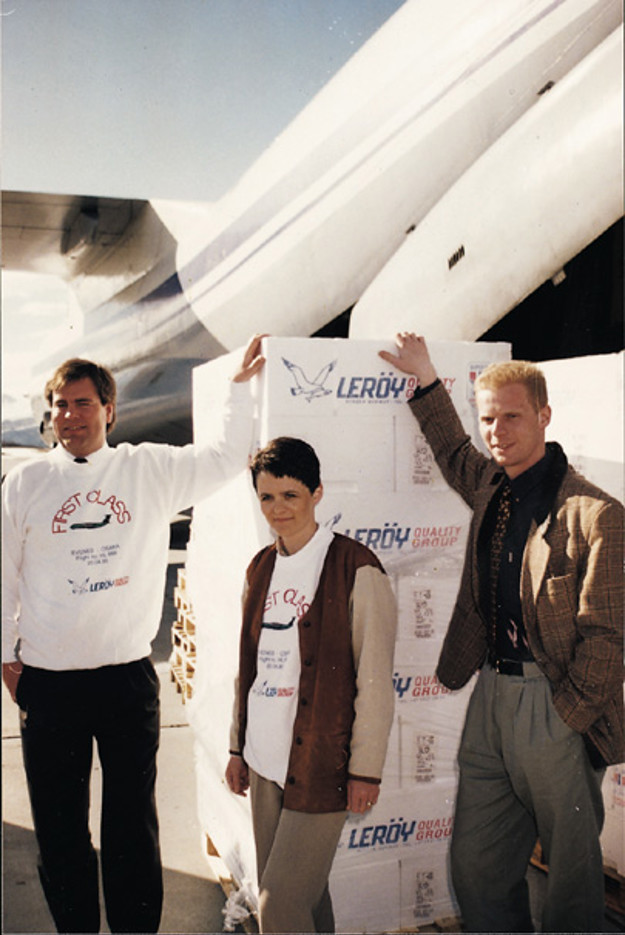
The year is 1995. At an airport in Japan, a young man is waiting. The first of what will eventually be one thousand charter flights is about to land. All crammed with Norwegian salmon supplied by Lerøy. This was the quickest way to transport fresh salmon. And it was just the beginning.

“Naturally, that was a big day for us, and it went on to become a resounding success”, recalls Lerøy’s CEO, Henning Beltestad.
Today, Lerøy is responsible for a quarter of all salmon and trout exported from Norway to Japan.
But really, the story begins a few years earlier. Through this collaboration, Lerøy perfected a technology that made it possible to maintain the quality of the fish even after it had been slaughtered and filleted.
“That is how we raised the quality of the salmon to the next level”, explains Henning.
The technology marked a turning point. When he shared the news with a Japanese customer, it immediately aroused their interest. This marked the start of a collaboration based on both quality and food culture.
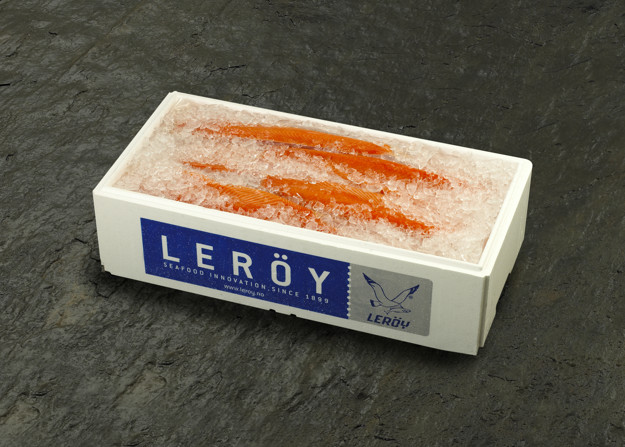
Building on their success with transporting pre-rigor salmon to Japan, Lerøy and Tokai Denpun decided to take on a bigger challenge. Their aim was to jointly develop a salmon product that would satisfy even the most exacting and quality-oriented consumers.
Koki Yotsui, Lerøy’s Representative Director in Japan, says the Japanese market is famous for being demanding and quality-conscious.
“Quality is the key to succeeding in the Japanese market, and quality is not just about freshness: it’s about taste, texture and various other parameters”, says Koki.
Salmon for raw consumption needs to meet an even higher quality threshold. Koki explains that when you cut slices of sashimi, the texture has to be firm, otherwise the piece of fish will be ruined. Texture is one of the most important quality parameters, because everyone can see it.
“I soon learnt what is required if you want to deliver quality products to the world’s most exacting market, which is salmon for raw consumption in Japan”, says Henning.
The challenge was removing the spine to produce IKARIMI, which means “firm structure” in Japanese. The salmon had to be filleted by hand, which gave us back and mid loins.
“Processing salmon like this is an art. It requires experience, patience and precision. Each cut must be done in a single motion, and you have to get the rhythm just right”, says Fredrik Hald, a trained chef who is Head of Product Development at Lerøy.
One of the people who does this job at Lerøy describes it as being like a dance. Hand-filleting salmon also results in more attractive pieces, better quality control and less waste. But equally importantly, it demonstrates how much we care about, respect and take pride in our raw material, which is something that the food cultures in both Japan and Norway really value. Our top quality loin was received extremely well in Japan, where the product soon became very popular.
After 30 years of success in one of the world’s most demanding markets, the story finally returns to Norway, in the shape of a premium salmon loin. A product that was originally created to satisfy even the most discerning and quality-conscious consumers.
“The product is fantastic. When we launched the Lerøy loin, it was a great day for me”, says Henning.
Koki is also excited by the launch. He says that it makes him feel even more closely connected to the company.
“I am both proud and pleased to hear that it has been launched in Norway”, he says. “The fact that Lerøy has launched a high-quality salmon loin that is so steeped in Japanese culture reinforces my ties to Lerøy.”
Today, Lerøy’s salmon loin is a symbol as much as a product. It represents three decades of cooperation, trust and mutual respect for raw materials, and after a long journey it has finally been launched in Norway.


