

“The arrival of Aquatraz C2 is a major and exciting milestone for Lerøy. After more than a month in transit from China, the installations have finally arrived in Norway. This represents an important part of Lerøy’s long-term efforts to develop aquaculture and adopt new solutions,” says Morten Fjæreide, Managing Director of Lerøy Sjøtroll.
Aquatraz forms part of Lerøy’s long-term efforts to develop and adopt new technologies for responsible aquaculture.
The next phase-completion at CCB’s yard at Ågotnes in Øygarden municipality-will now begin. The three units will then be towed to the Djupestallen site in Tysnes municipality, where the plan is to stock fish early in the new year.
“We are proud that CCB is playing a key role in completing these units at our yard at Ågotnes. This is an important project for Norway’s supplier industry and for Øygarden as an industrial municipality,” says Jan-Dagfinn Lund, CEO of CCB AS.
The investment in Aquatraz C2 is a clear response to the shared ambition of the industry and the authorities to develop new solutions that can contribute to sustainable growth in Norwegian seafood production.
At the same time, it is important to emphasise that this does not signal a transition of all production to closed-containment systems.
Traditional technology will remain the essential foundation of Norwegian aquaculture. Its continued development will proceed in parallel with investments in new solutions.
“We do not believe that one technology is suitable everywhere. Lerøy has invested in and adopted new technology for salmon and trout production over time. Aquatraz will be a new addition to solutions including submerged pens and sea-lice lasers. We believe the future of aquaculture will combine traditional technology with new solutions adapted to our sites along the entire coast,” says Morten Fjæreide.
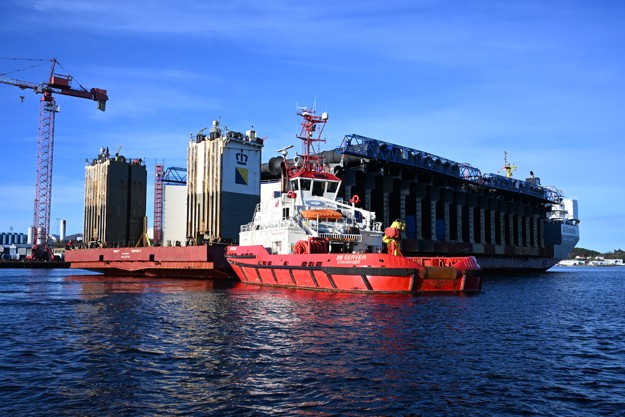
The arrival of Aquatraz C2 in Norway marks the end of a lengthy construction and transportation phase. The project also illustrates what is required to develop and adopt new technology in aquaculture. Initiatives of this kind take time, require substantial investment and depend on decisions made long before the technology can enter operation.
“What we see at Ågotnes today is the result of decisions made a long time ago. Developing new technology requires time, substantial investment and many long-term decisions. If we are to continue making such decisions and investing in new solutions for Norwegian aquaculture, competitive and predictable framework conditions are essential,” says Fjæreide.
The project comprises the construction of three Aquatraz C2 units for Lerøy and was delivered by Seafarming Systems. The technology was developed in collaboration with Lerøy and SalMar.
Each unit has a water volume of 70,000 m³ and six water intakes at a depth of 35 metres. This provides access to lice-free water and efficient water exchange. The technology was developed to help address two challenges facing Norwegian aquaculture: sea lice and nutrient discharges into the sea.