

It is approaching 4:30 in the morning. The temperature is just below freezing, and it’s dark in Båtsfjord. Out at sea, the darkness is broken by the lights of a trawler. At first, they appear as small points in the distance, gradually becoming clearer as the vessel cuts through the water and approaches the quay.
On board is the catch from the latest fishing trip. Most of it is saithe, along with some cod and redfish. The fish will now be unloaded and brought into the processing plant.
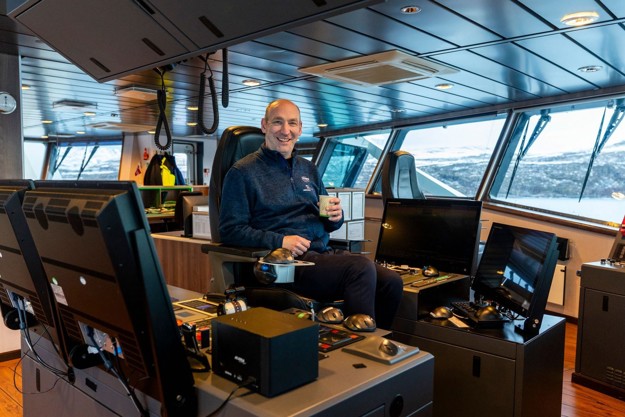
“Most of the catch from this trip will be delivered fresh, but we always deliver some frozen fish as well,” says captain Helge Johannessen.
Once the catch is unloaded, one part of the job is complete. At the same time, another begins. Inside the plant, the fish must be received and processed. Production Manager Durita Jakobsen and the other employees in Båtsfjord are responsible for this work.
For Lerøy, the interaction between activities at sea and operations on land is essential to keeping production running.
The connection between what happens at sea and on land is no coincidence. In order for Lerøy to fish its quotas, the company is subject to an obligation to maintain activity in five municipalities in Northern Norway. Båtsfjord is one of them.
In practice, this means that the company cannot simply close its doors and shut down facilities when market conditions or quotas change.
“We have to maintain activity at our facilities throughout the year. Behind these facilities are employees who need a workplace to go to, and local communities that depend on this activity,” says Børge Soleng, Managing Director of Lerøy Norway Seafoods.
For Lerøy, this is a responsibility that must be honoured even when operating conditions change. Processing fish in Norway creates economic activity, value and jobs on land. This is why there is broad political agreement that more wild-caught fish should be processed domestically.
“Here, the fishing vessel and the processing plant are closely interconnected, and it is precisely this connection that enables us to deliver on the political ambition of increasing processing on land. To be able to do this over time, however, we depend on profitable operations,” says Børge Soleng.
Many people may think that the fishing season runs from January to April. But that is not the case for everyone. The captain can confirm that.
“We fish all year round,” says Helge Johannessen.
For the processing plant on land, this means access to fish outside the peak season in the first half of the year. To maintain activity throughout the year, the plant depends on fish arriving even during periods when the coastal fleet is unable to supply it.
This interaction is particularly important during the first month of the year and in the autumn.
“If we didn’t fish with trawlers, we would have virtually no fish at all in January, after the summer and throughout the autumn. These are some very critical months for us,” says Production Manager Durita Jakobsen.
“For us, access to fish ultimately comes down to people. If we have fish to process, we have activity in the plant,” she adds.
The link between fishing and land-based processing is crucial. Lerøy’s fishing rights come with an obligation to process fish on land. Fishing should not only generate revenue for those working on board the vessels, but also secure value creation and jobs in coastal communities.
“It is a relationship of mutual dependence. Without land-based processing, there is no basis for fishing, while the processing industry, in turn, depends on fish from its own vessels,” says Helge Johannessen.
Lerøy’s processing plant in Båtsfjord is equipped for significantly higher production. But while capacity on land has increased, access to some of the most important fish species is under pressure.
“We can see that there is less fish out there now,” says Helge Johannessen.
The cod quota is at its lowest level since 1991. This means less cod is available to trawlers, and consequently less fish can be brought ashore for processing. The saithe quota will also be reduced from 2026 to 2027.
This creates a dilemma: the plant is built to handle far more activity, but lower quotas mean less fish to process. At the same time, Lerøy is required to maintain activity at the facility under its activity obligations. The plant is designed to operate double shifts.
“We have both the capacity and the people to produce more here, but we depend on enough fish coming in. When supply decreases, the impact is very noticeable at a plant like this,” says Durita Jakobsen.
Inside Lerøy’s plant in Båtsfjord, the production lines keep running for as long as fish continue to arrive.
Today, Lerøy’s plant has around 100 employees and is the largest private-sector employer in the municipality. With investments of more than NOK 500 million in Eastern Finnmark, Lerøy has made a significant commitment to production capacity and continued activity in the region.
Following the renovation of the plant in 2024, new technology has also been introduced, enabling higher production volumes.
But investment alone is not enough. The ability to utilise the plant’s capacity and create more year-round jobs is closely linked to how much fish actually comes through the doors.
Behind the discussion about fish, quotas and production capacity lies another story: the jobs that enable people to stay, put down roots and build a life in the north.
Depopulation is a major challenge in Northern Norway. Young people in particular move south for education or job opportunities, and many never return permanently. Access to jobs is therefore important for maintaining vibrant local communities.
For captain Helge Johannessen, his job has made it possible to continue living in Hammerfest, where he was born and raised.
For Durita Jakobsen, the story was different. Her job brought her to Båtsfjord, which would eventually become her new home. Before she left, a colleague showed her where Båtsfjord was on a map of Norway.
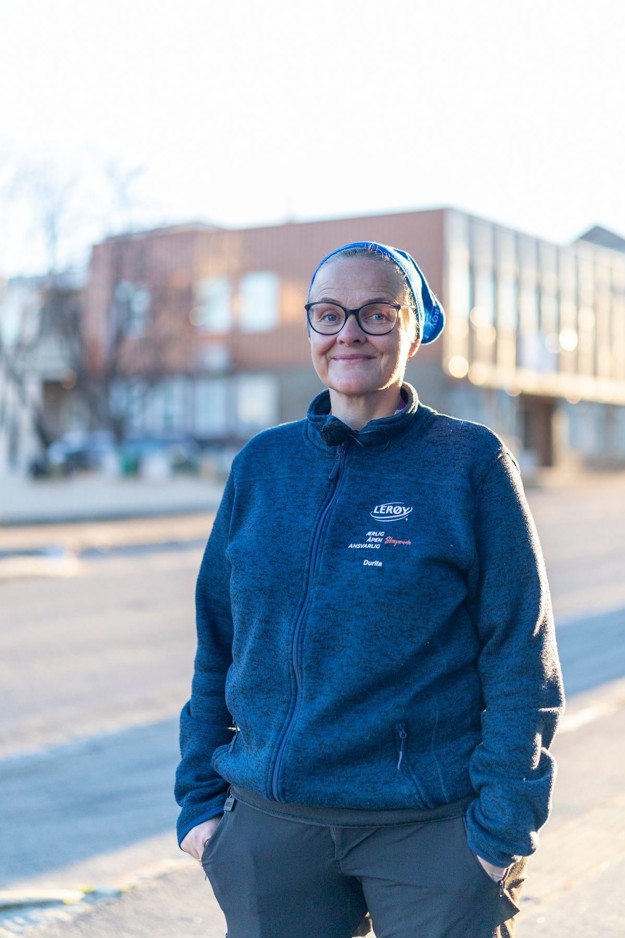
“He asked if I realised it was ‘up there’ I was going. ‘Allllll the way up there,’” she says with a smile.
Having a free ticket home made it feel safe to take the chance. Little did she know that she would never use it.
Instead, she built a life for herself in Båtsfjord.
“I have children, a dog, a cabin, a car and a partner. And a couple of snowmobiles,” she adds.
Båtsfjord became home.
And perhaps this is where the connection between sea and land becomes clearest: the fish arriving at the quay does more than keep the processing plant running. It also helps create the foundation that enables people to live, work and build a life along the coast.


